


Trends in Autobiographical Music Right Now
- Jul 9
- 6 min read
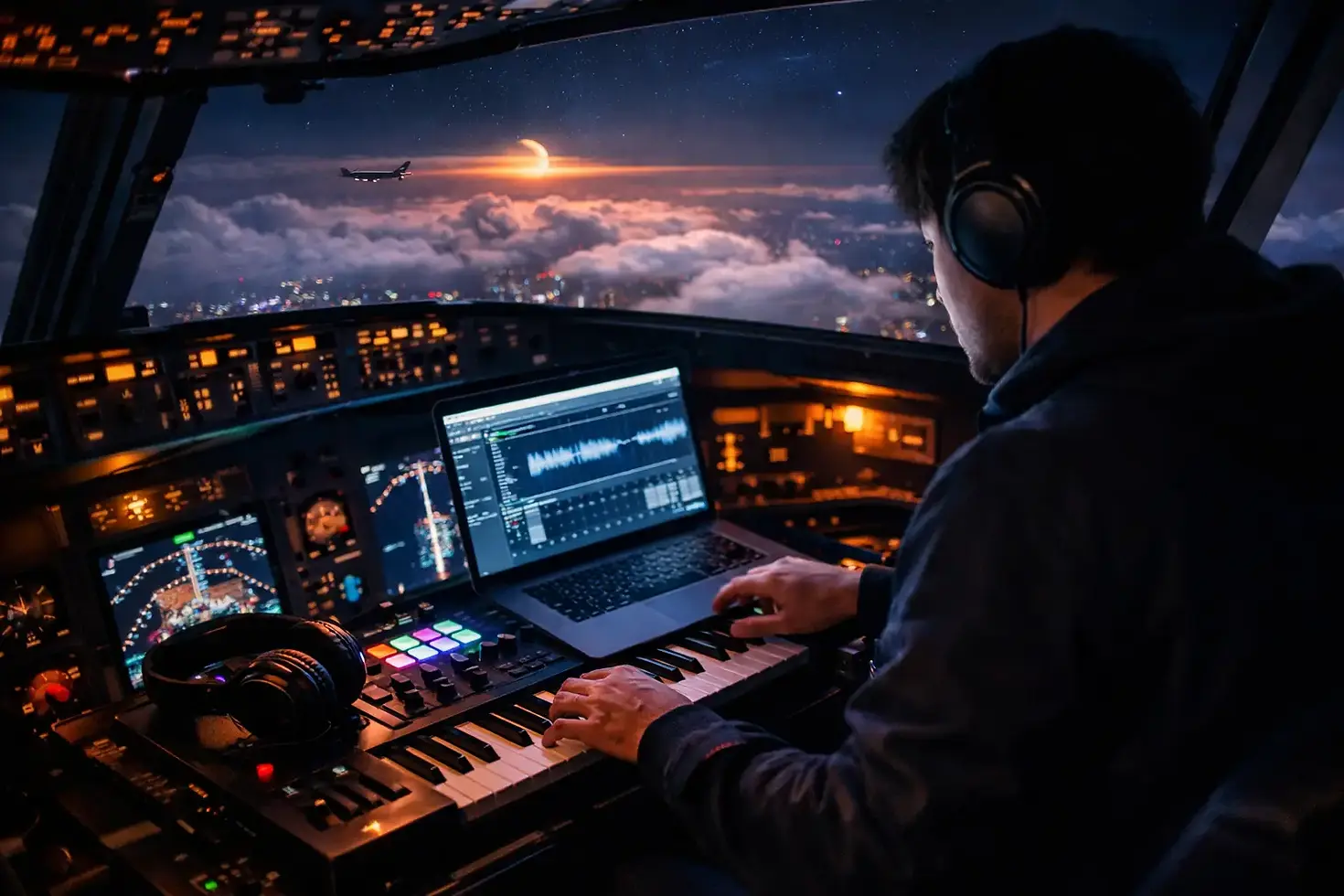
Some songs feel less like performances and more like cabin lights dimming over a night flight - intimate, suspended, impossible to fake. That is where trends in autobiographical music have become most compelling. Artists are no longer just telling listeners what happened. They are building lived environments out of memory, voice, geography, silence, and detail.
This shift matters because listeners have changed too. People want more than a catchy hook or polished persona. They want context. They want the story behind the chorus, the city behind the mood, the wound behind the melody, the version of a life that still feels unfinished. Autobiographical music has always existed, but right now it is moving with a different kind of honesty - less posed, more textured, and often more cinematic.
Why trends in autobiographical music feel different now
For years, personal songwriting often leaned on confession as its main currency. If an artist revealed heartbreak, family history, addiction, desire, or fear, that alone could carry the emotional weight. Now the bar is higher. Audiences can sense when a song uses vulnerability as a shortcut instead of a craft.
The strongest autobiographical work today tends to be specific rather than simply exposed. Instead of saying, "I was lonely," artists mention the airport terminal, the motel lamp, the voicemail they kept replaying, the freeway at 2 a.m., the smell of rain on a childhood street. The music does not only announce emotion. It places you inside it.
There is also a growing resistance to the polished myth of the unreachable star. Streaming culture, social media, and direct artist-to-audience communication have made people more interested in process. Listeners want to know where songs come from, what season of life shaped them, and how memory turns into sound. That does not mean every artist needs to overshare. In fact, one of the biggest changes is that restraint now matters as much as revelation.
The rise of hyper-specific storytelling
One of the clearest trends in autobiographical music is the move toward sharp, personal detail. Not detail for decoration, but detail as emotional proof. A single true image can hold more weight than a whole verse of abstract language.
This is part of why songs tied to place are resonating so strongly. Cities, roads, hotels, coastlines, neighborhoods, and transit spaces are becoming emotional anchors. Travel is no longer just a backdrop. It often becomes a language for identity itself. Movement between places mirrors movement between versions of the self.
That approach feels especially powerful in genres that once favored distance or mood over narrative. Electronic, ambient-pop, alternative R&B, and genre-blended independent music are making more room for autobiography without losing atmosphere. The result is music that still feels expansive, but carries fingerprints. It can be dreamy and documentary at the same time.
Memory is replacing straight chronology
Not every personal song now follows a neat timeline. In fact, many artists are avoiding the linear memoir approach altogether. They are writing the way memory actually behaves - fragmented, circular, triggered by sensation, and full of emotional jumps.
This has changed the structure of autobiographical songwriting. A verse might begin in the present, drift into childhood, then return through a single recurring sound or phrase. A chorus might not explain anything directly, but instead hold the emotional center while the details arrive in flashes around it.
That makes the listening experience more immersive. It also allows artists to stay truthful without pretending memory is clean. Real life rarely comes in tidy scenes. It arrives in fragments - headlights, departures, names, windows, weather, one sentence that stayed for years. Songs that honor that fragmentation often feel more believable than songs that over-explain.
Production is becoming autobiographical too
A major development is that autobiography no longer lives only in lyrics. It lives in production choices, field recordings, vocal treatment, pacing, and sonic atmosphere. The sound itself can carry personal history.
An artist might use ambient noise from a real location, leave more breath in the vocal, distort a memory through tape texture, or build a beat that feels like motion, altitude, insomnia, tension, or release. This is especially noticeable in independent music, where artists have more freedom to design emotional worlds without forcing everything into commercial formulas.
That creates a deeper form of storytelling. Sometimes a song says less and reveals more because the production is doing narrative work. A wide, drifting synth can suggest distance. A dry, close vocal can make the listener feel almost uncomfortably near. Silence between phrases can communicate hesitation, grief, or reflection better than another line ever could.
For artists creating from lived experience, this matters. Personal truth is not only what happened. It is how it felt in the body, in the room, in the atmosphere. The best autobiographical music now understands that sound design is memory design.
The line between diary and art is getting sharper
There is a misconception that autobiographical music is strongest when it is most raw. Sometimes that is true. Often it is not. One of the more interesting shifts is that artists are becoming better editors of their own lives.
Not every private detail belongs in a song. Not every wound is ready to be translated. The work that lasts usually comes from shaping experience, not merely unloading it. That is the trade-off. Total exposure can feel immediate, but crafted reflection tends to travel farther.
Listeners are responding to artists who know how to transform rather than simply confess. The goal is not to read a diary entry over chords. The goal is to turn lived experience into something someone else can inhabit. That takes control, perspective, and sometimes time.
This is where autobiographical music becomes more than self-expression. It becomes architecture. A personal story is arranged so carefully that strangers can hear their own lives inside it.
Identity is being expressed in layers, not labels
Another reason this music feels richer is that artists are resisting one-dimensional self-definition. Instead of presenting identity as a fixed headline, they reveal it through language, sound, heritage, movement, contradictions, and emotional tone.
Multicultural influences are especially important here. Artists are blending genres, languages, rhythms, and references in ways that feel lived rather than strategic. A bilingual line, a regional instrument, a club texture beside a reflective vocal - these choices can carry autobiography without announcing it directly.
The same goes for ambition, solitude, and transition. Many artists are writing from in-between spaces. Between cities. Between careers. Between private pain and public image. Between who they were and who they are trying to become. That tension gives autobiographical music a unique kind of lift. It is not static. It moves.
What artists should learn from these trends in autobiographical music
The lesson is not that every song must be deeply personal. Mystery still matters. Character writing still matters. Imagination still matters. But when artists choose autobiography, the strongest path is usually the most intentional one.
That means being specific without becoming closed off. It means using detail that opens emotion rather than detail that only serves biography. It means understanding that your story becomes more powerful when it is crafted with form, rhythm, atmosphere, and selective focus.
It also means trusting subtlety. A listener does not need every fact to feel the truth. Sometimes one image, one vocal crack, one recurring sound, or one line about leaving a city at dawn can reveal a whole internal season.
For independent artists especially, this is a moment full of possibility. Audiences are not only open to personal storytelling. They are actively searching for work that feels inhabited. They want songs that come from somewhere real, even if that reality is filtered through synths, reverb, memory, and dream logic.
In that sense, autobiographical music is becoming less about confession and more about world-building. The artist does not just say, "this happened to me." The artist says, "this is how it looked from my window, this is how it moved through my chest, this is how it sounded when I turned it into art."
That is why the trend feels lasting rather than temporary. It speaks to a deeper hunger for presence in music. Not perfection. Not performance alone. Presence.
When a song carries real altitude, real place, and real emotional weather, people stay with it longer. They return to it on flights, late drives, quiet mornings, and nights when memory feels louder than the room. If that kind of storytelling moves you, enter the world of DJ FL450 and continue the journey through sound.


Comments